Home / GANs
GANs
Image models trained only on my own pictures
I treat these tools as material: train them on your own pictures, find where they fail, build the tool you need when it doesn't exist, and keep a hand on the final object.
The kernel
May – June 2026 · one GAN, 200,000 steps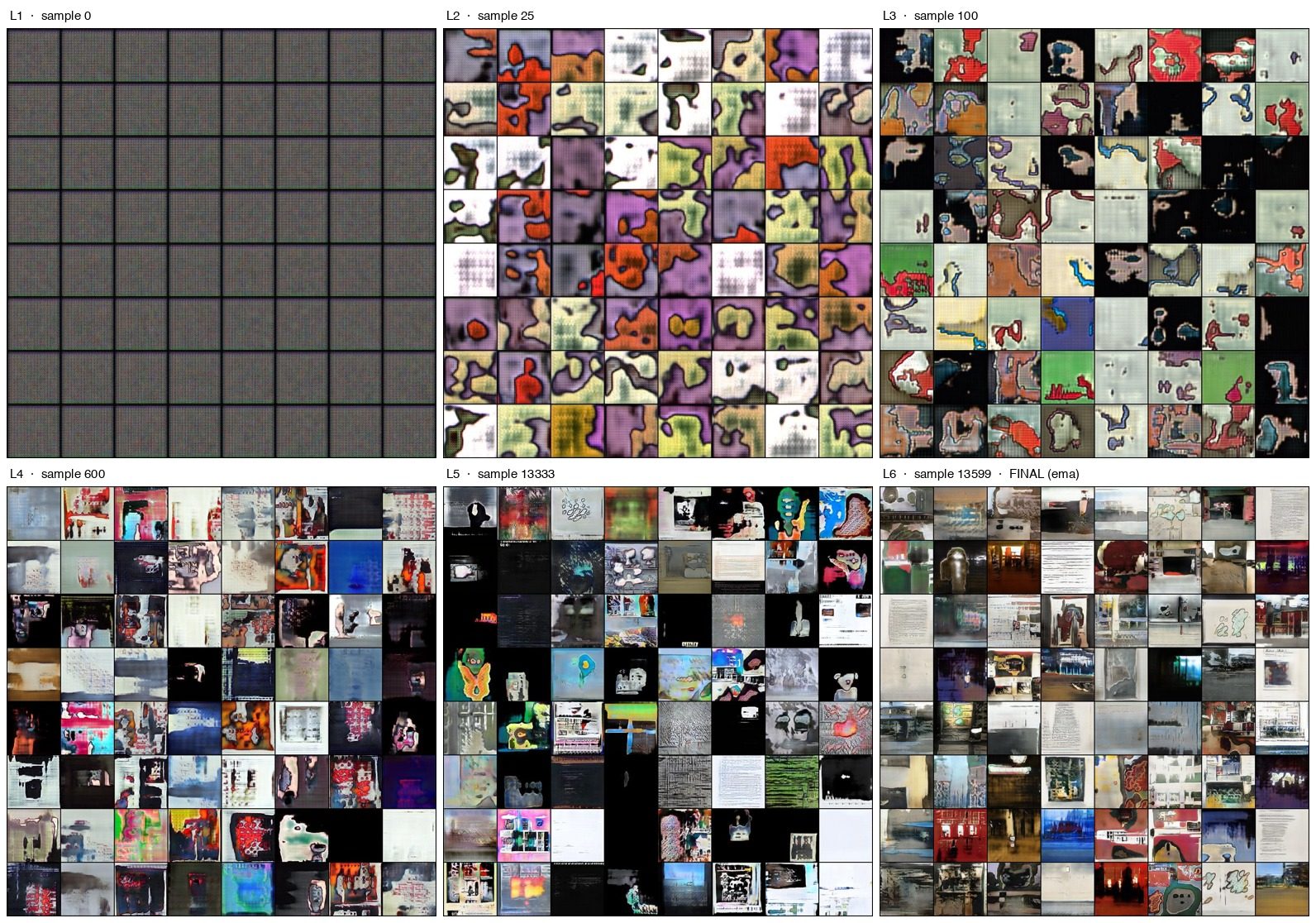
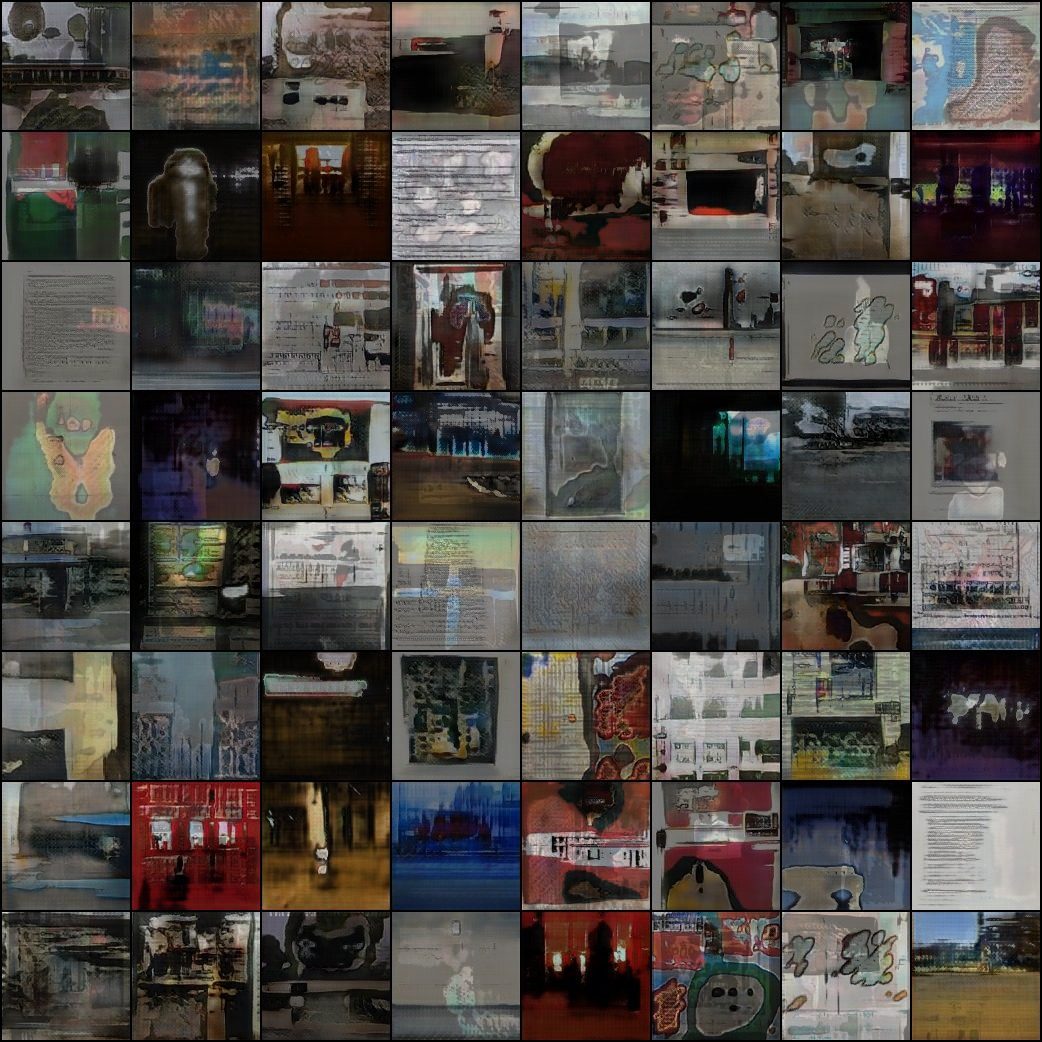
One model learning, left to right and top to bottom: pure noise at sample 0, blobs at 25, outlined creatures at 100, the archive surfacing at 600, the finished base model, then one Spell's own model.
A GAN (generative adversarial network) is two programs trained against each other: one makes images, the other tries to tell them from the real ones. Over time the maker gets good enough to fool the judge.
- The archive9,839 of my own images: photographs, posters, collages and paintings, pulled from the photo pool, the collage workspace and the archive.
- The trainingA lightweight GAN at 128 × 128 pixels, batches of 8, 200,000 steps. It ran for about 80 hours on my own computer.
- One model per SpellEach Spell then got its own copy, trained 4,000 more steps on only that Spell's pictures (June 14 to 16, 2026), from 472 pictures for the smallest to 4,000 for the largest.
- Into the workThe frames never resolve into anything representational; they stay in that unseen place, always still forming. Some become a starting layer I build a painting on top of.
Each Spell's model
64 samples per grid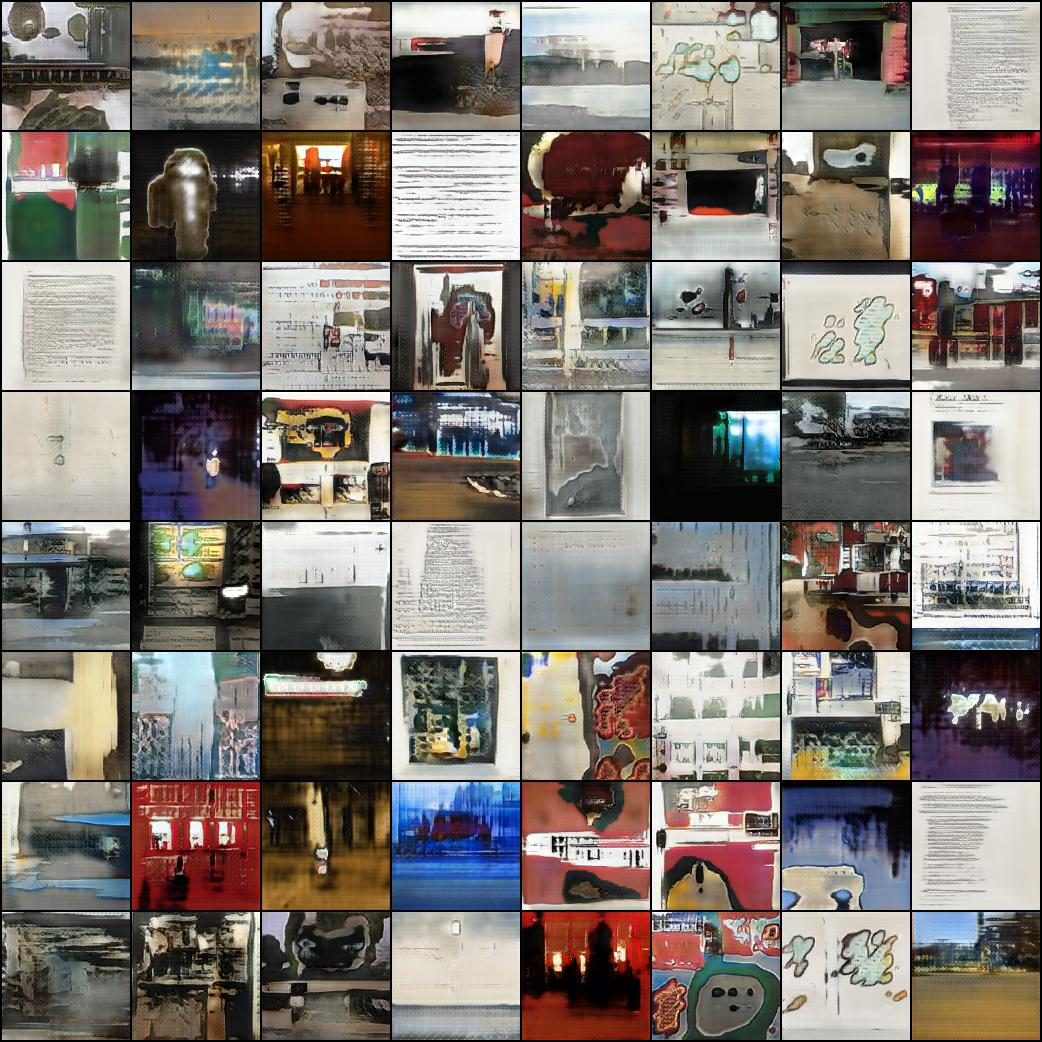
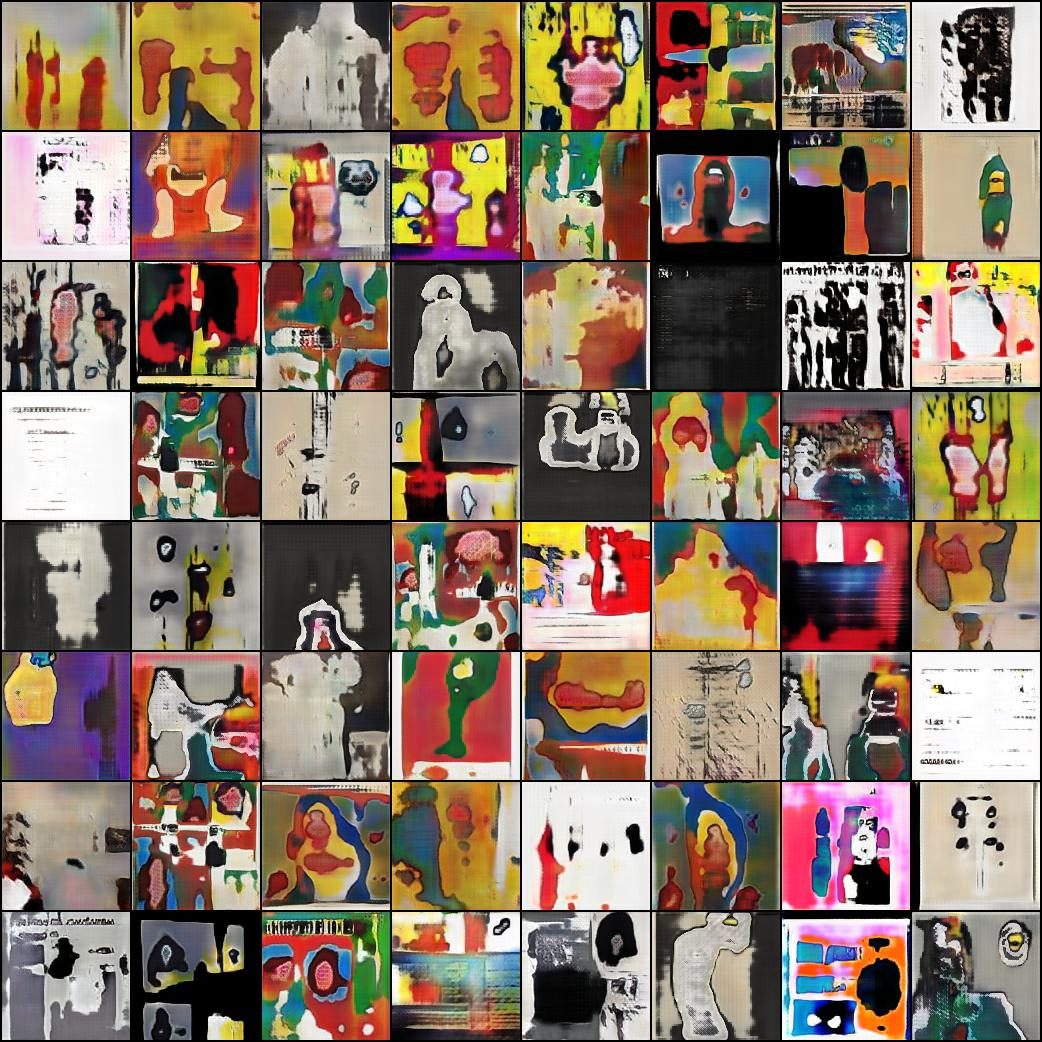
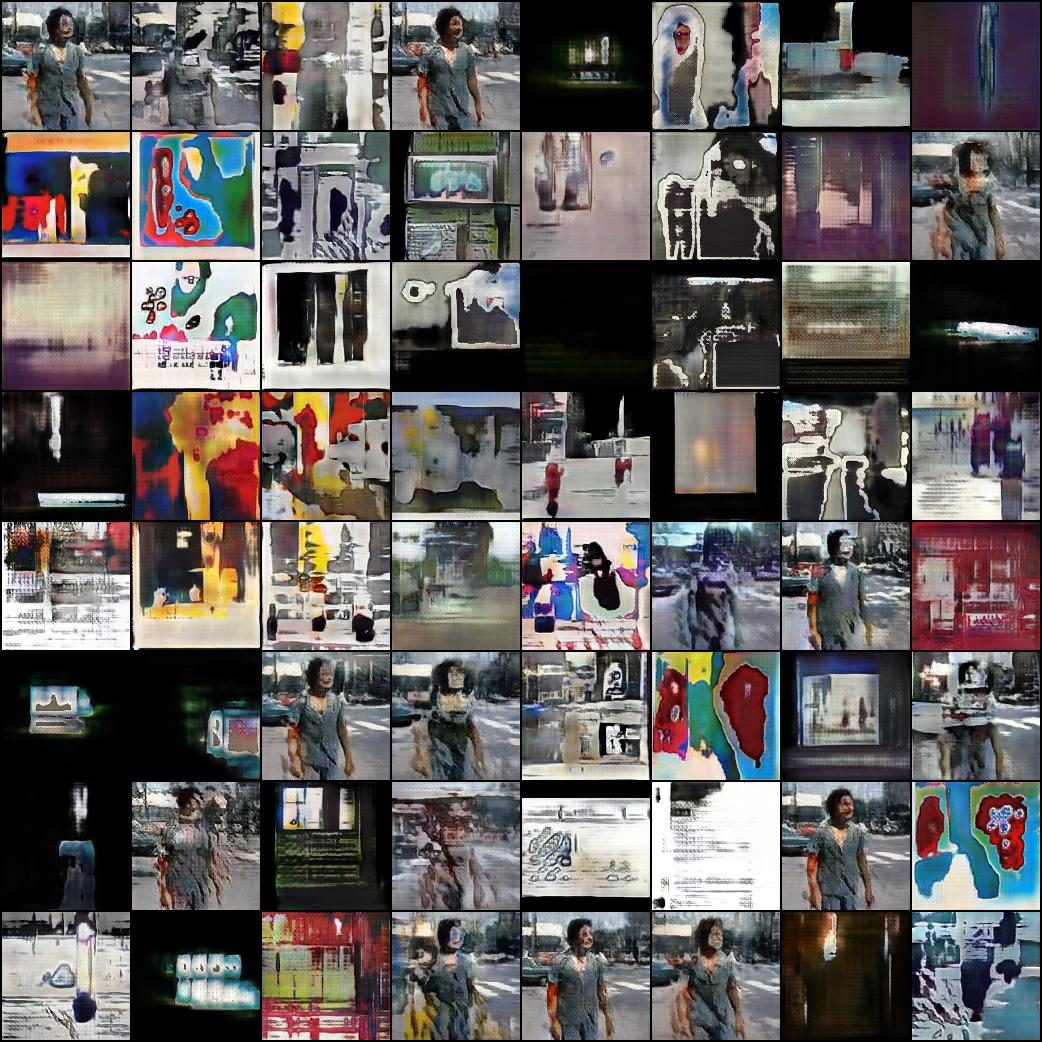
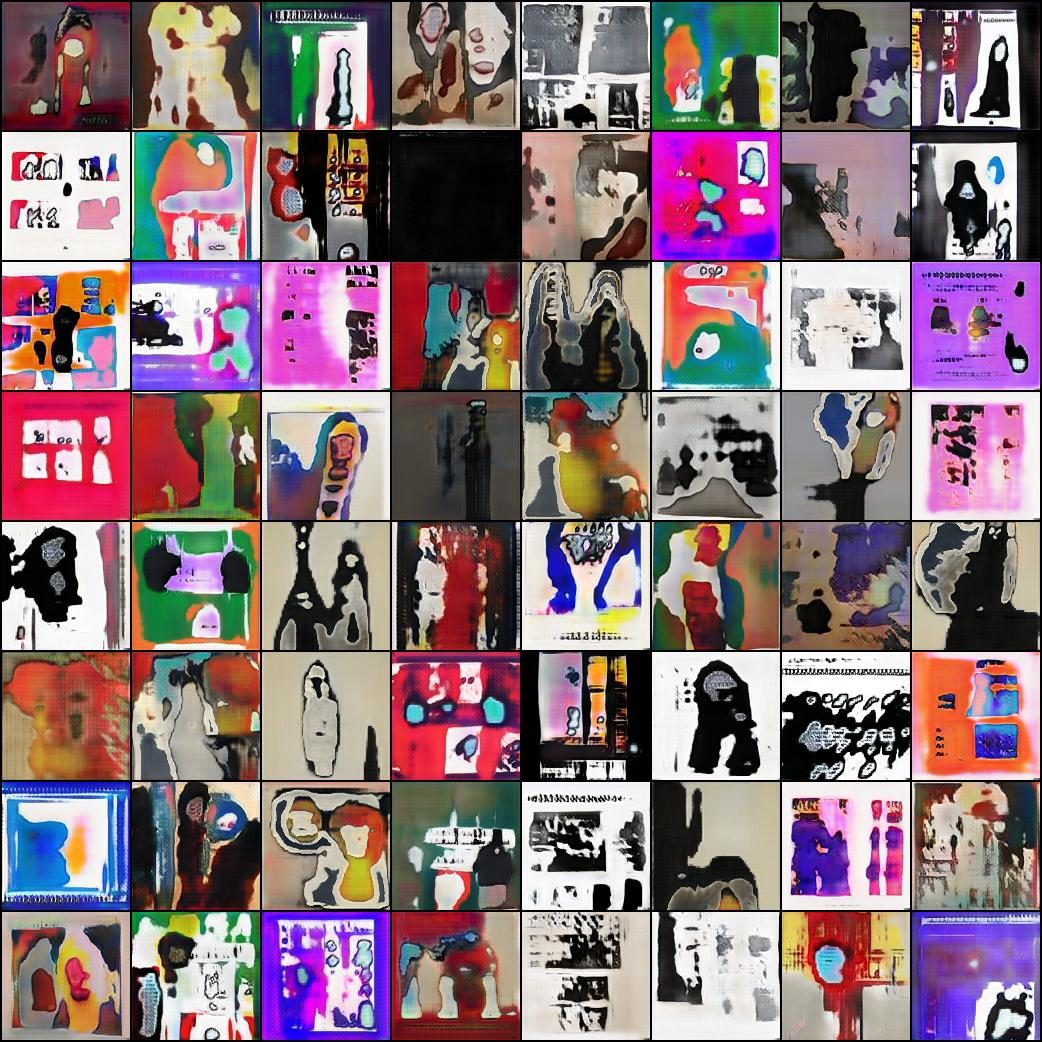
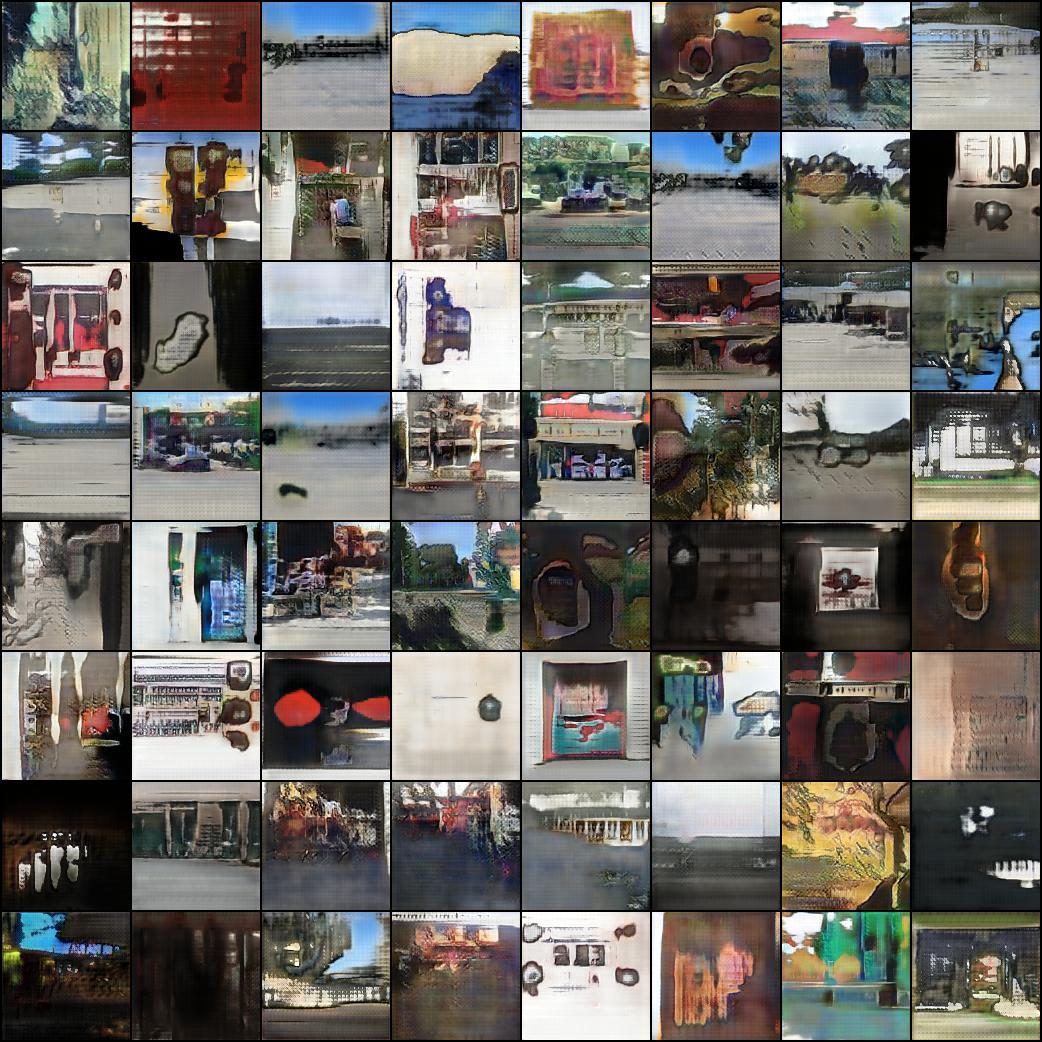
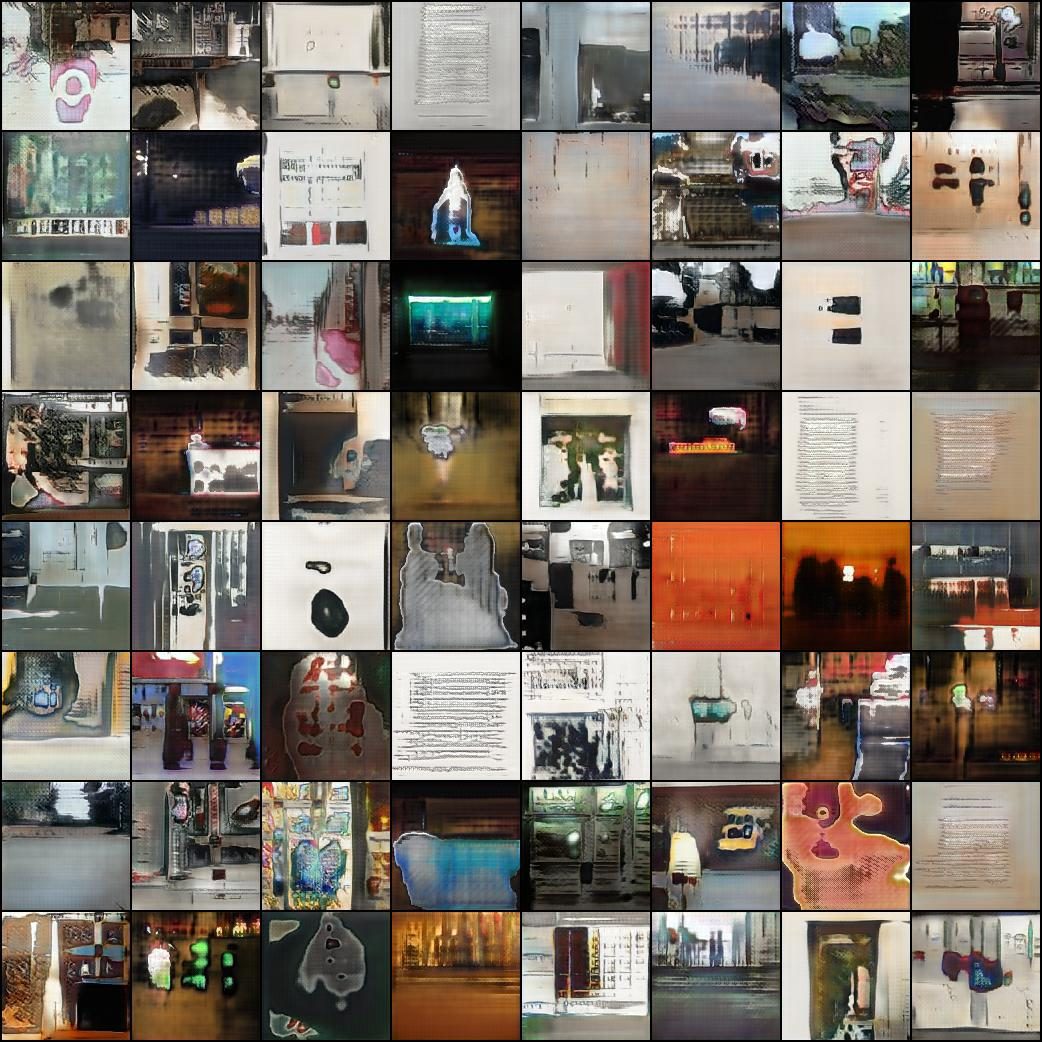
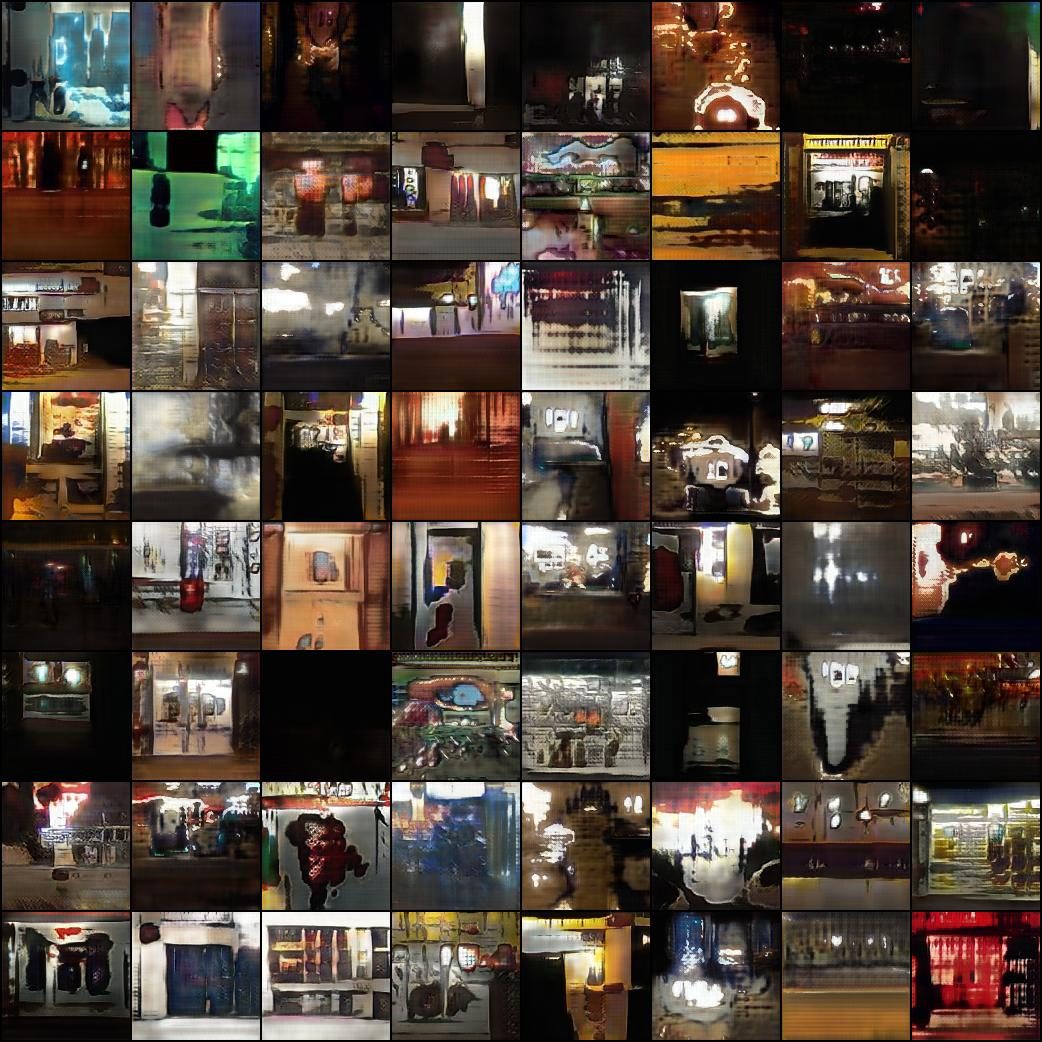
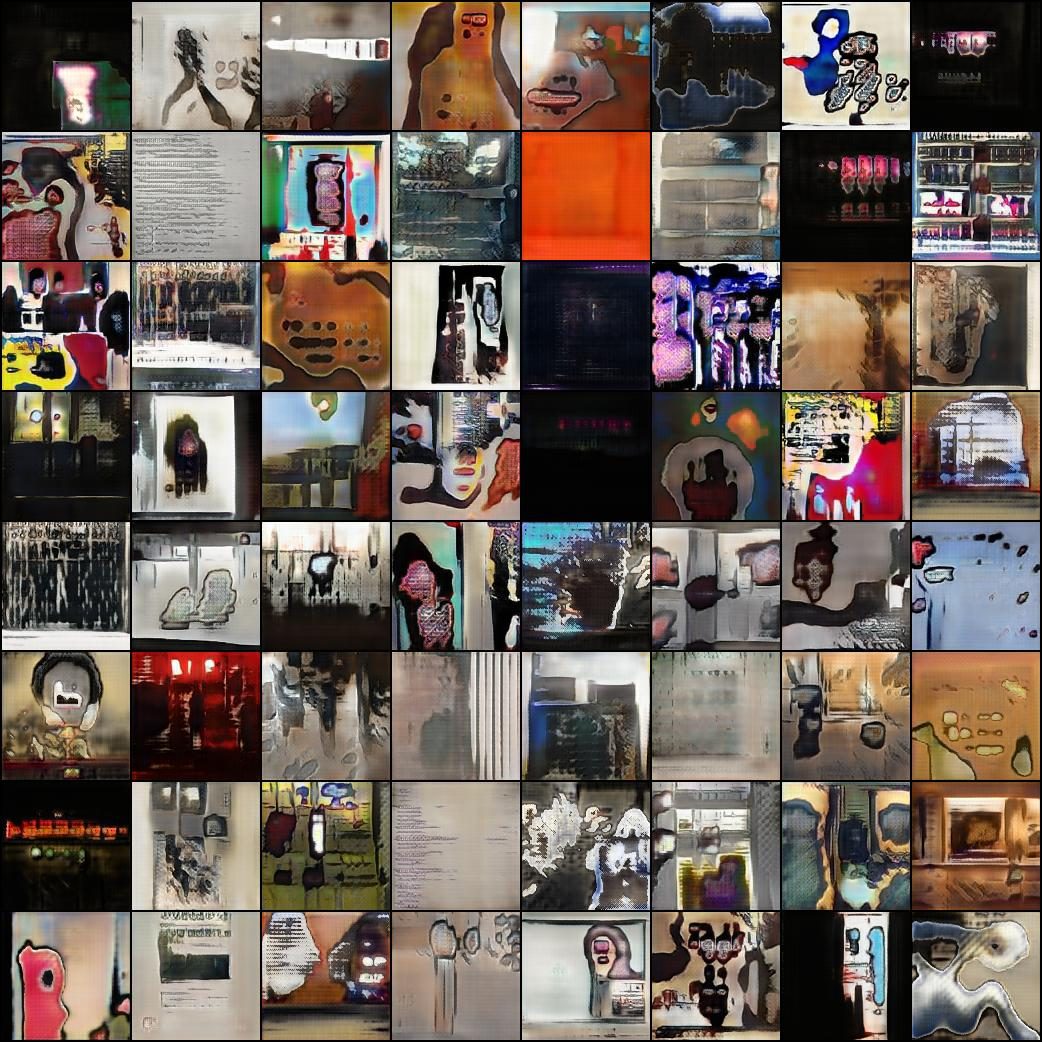
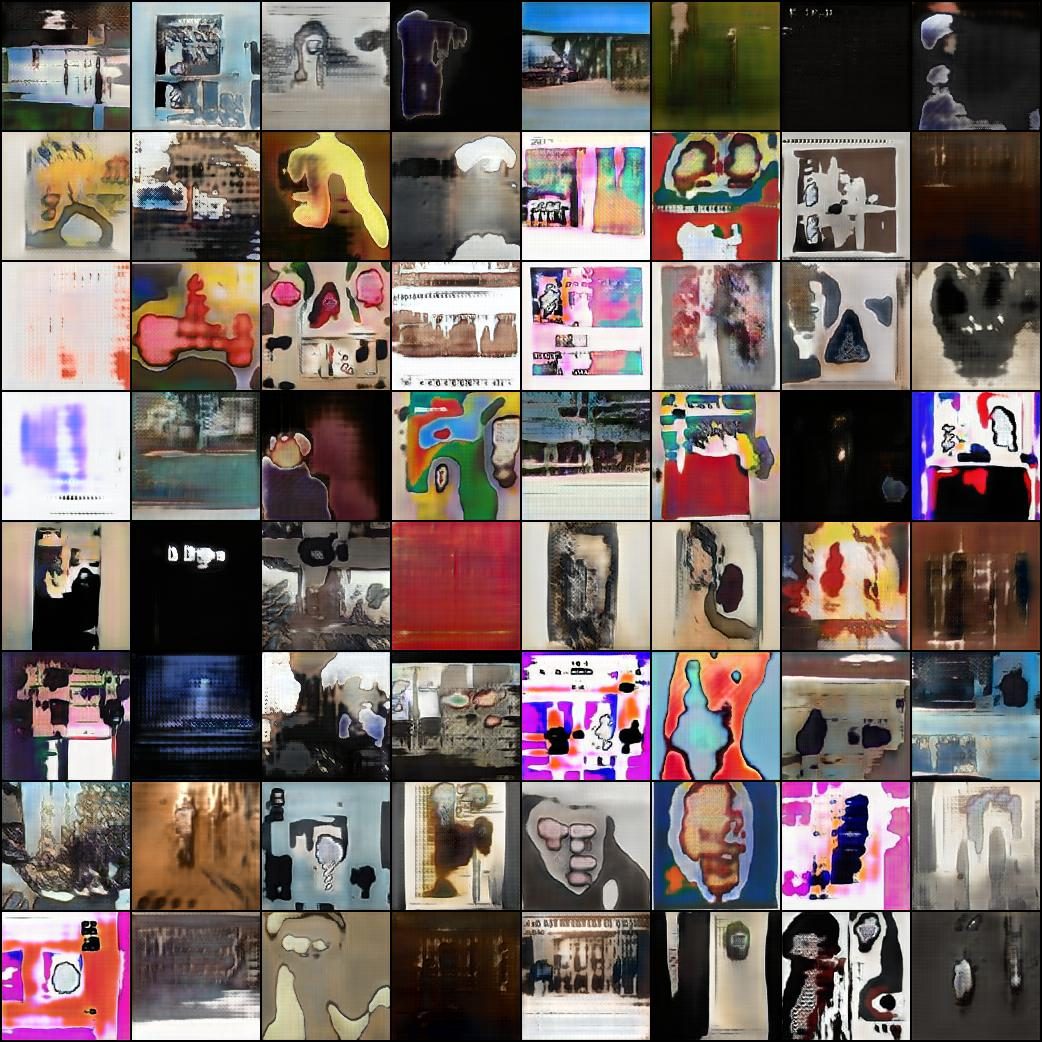
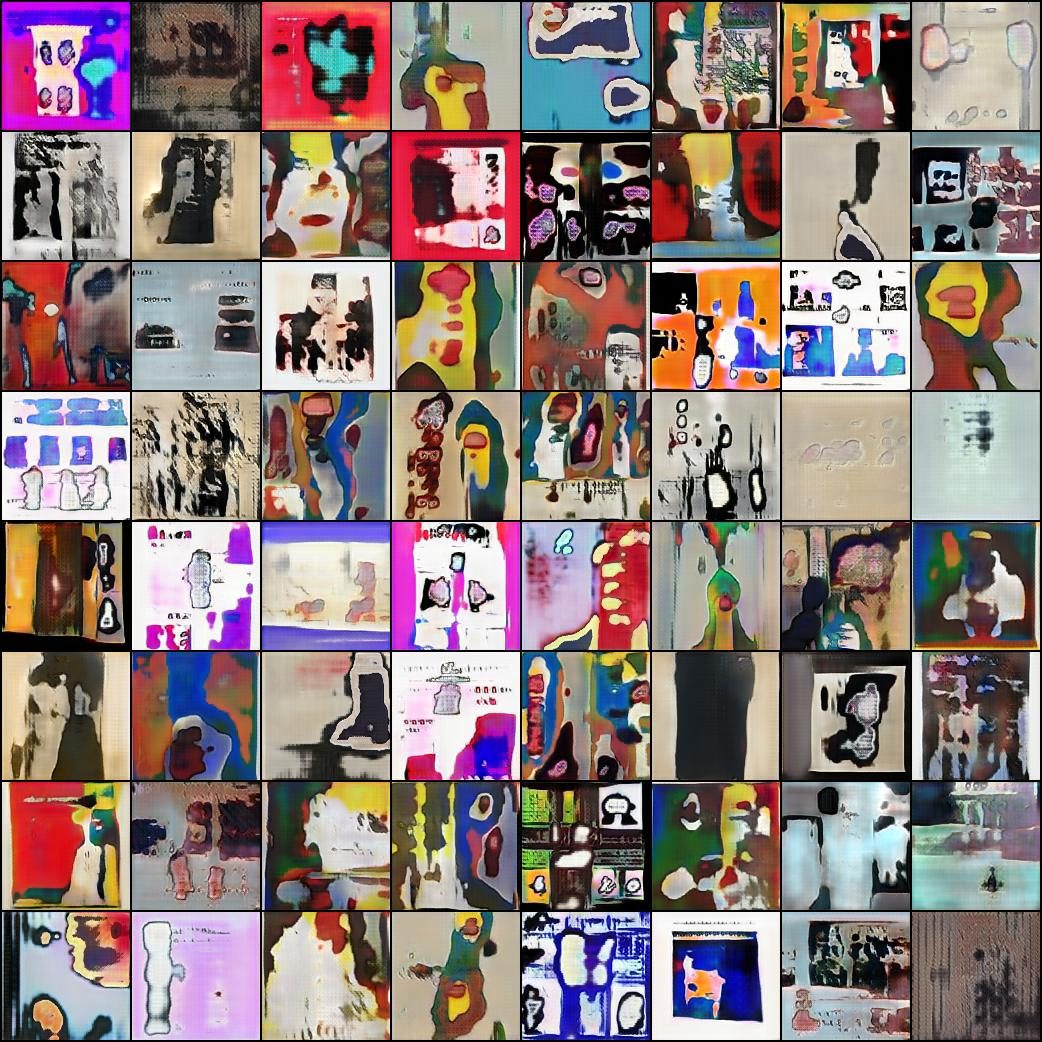
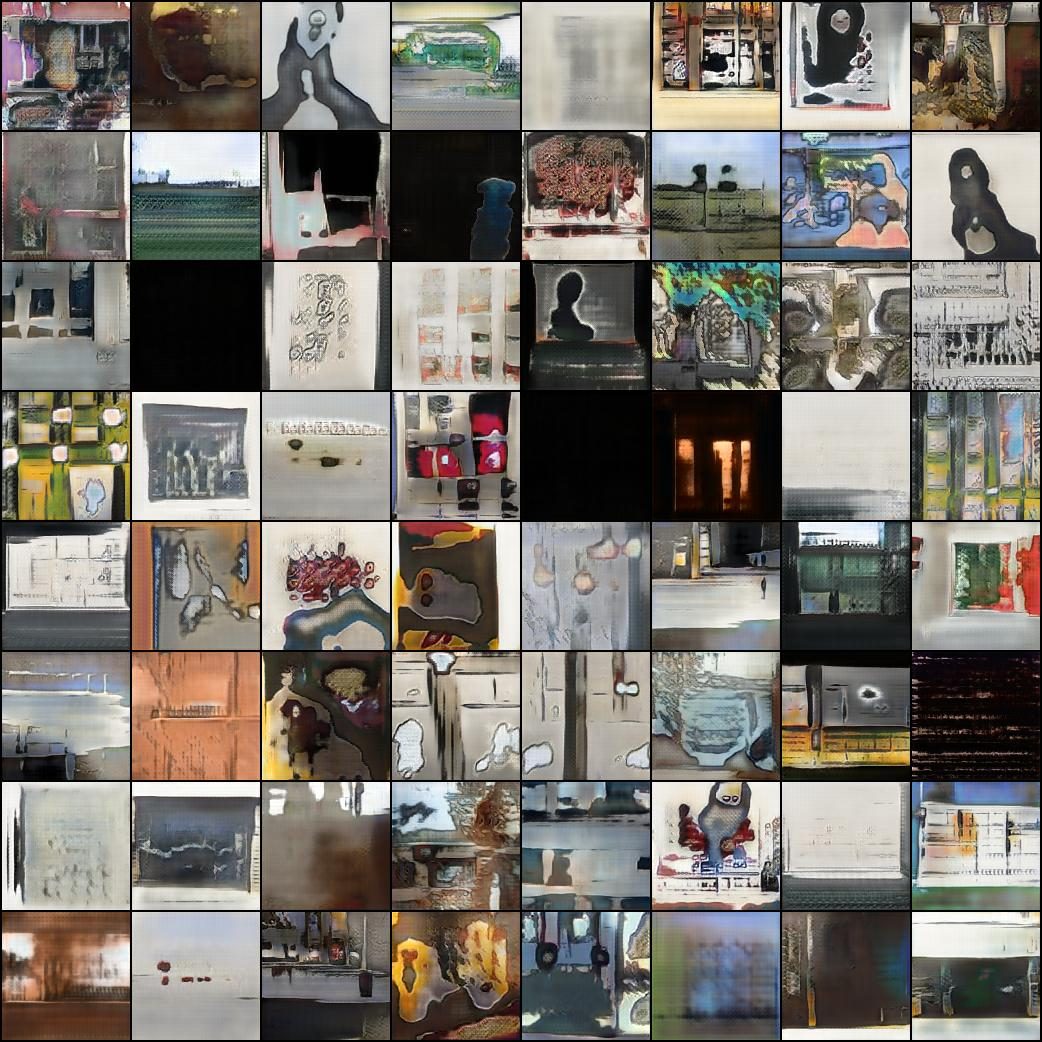
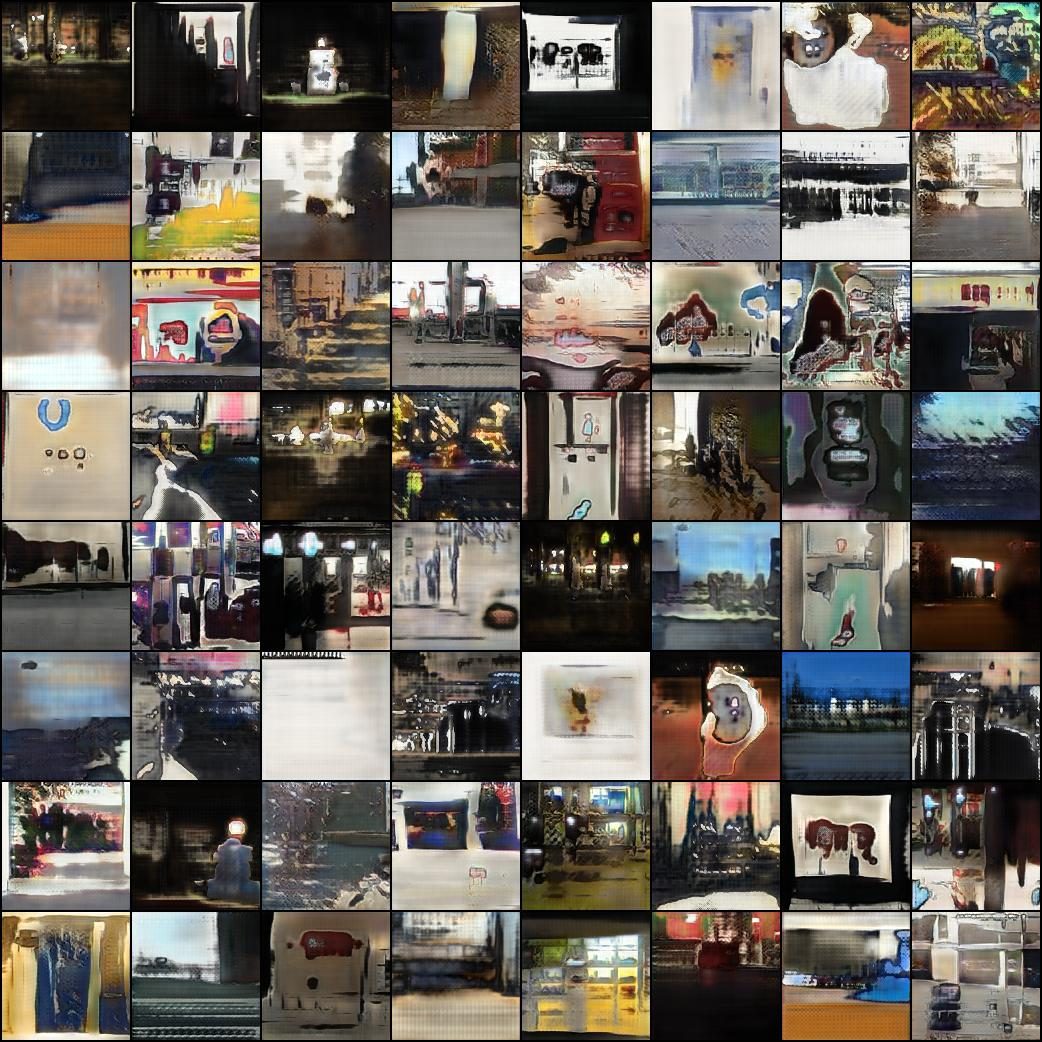
Early training
Frames from the first hours of training, before the model had learned anything. My website uses these frames on its production-stage page.
A painting planned from training time
plan · agreed August 2026A planned 60 × 60 inch painting: one Spell's 8 × 8 sample grid, screen-printed in six layers, each layer a different moment of training (samples 0, 25, 100, 600, 13,333 and 13,599), with a thin transparent white veil between layers. Six 24 × 24 inch paintings would be cropped from the same grids. Inks build from warm grey to two inks to CMY to CMYK.
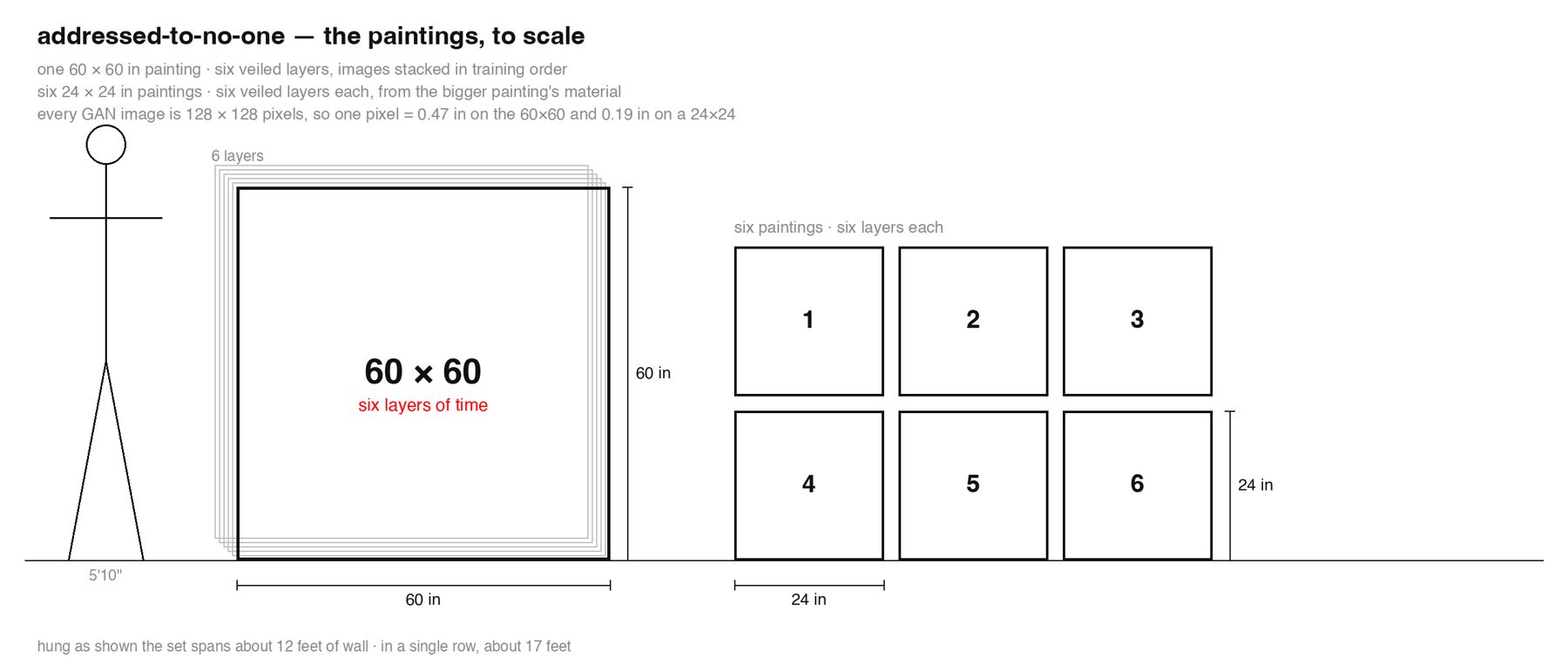
The plan, to scale.
Mockup: the grid under a 50% white veil.
LoRAs on my own pictures
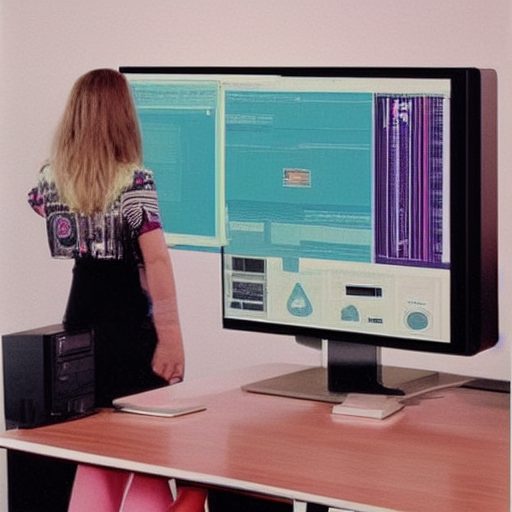
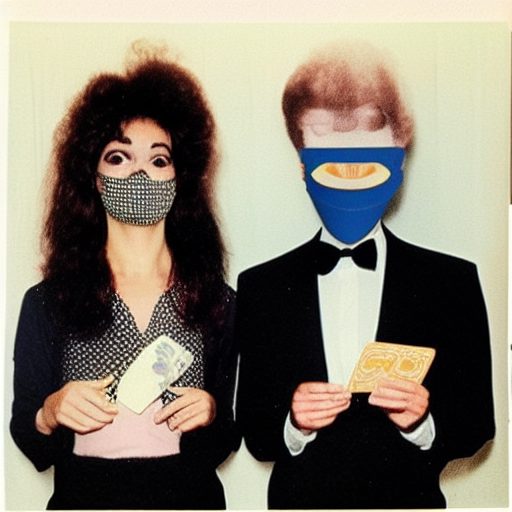
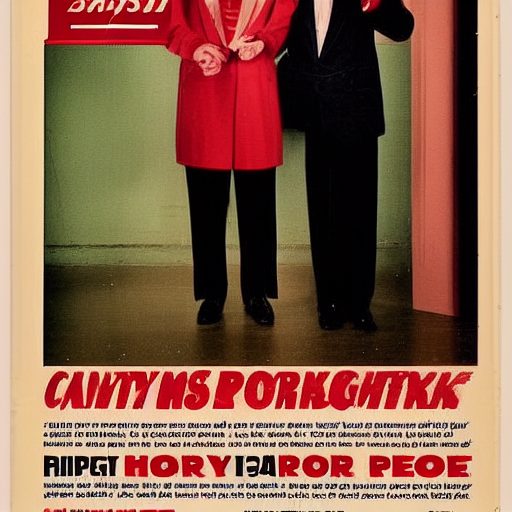
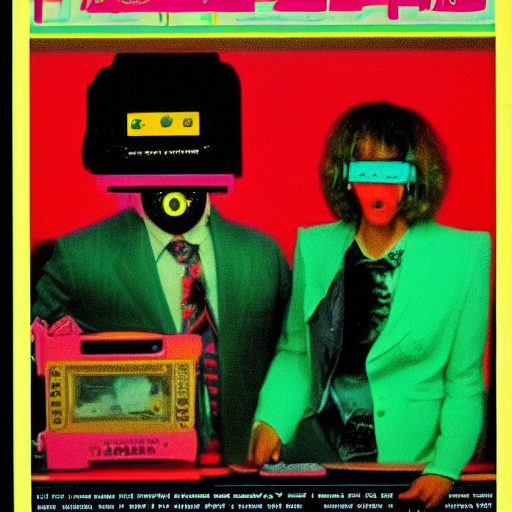
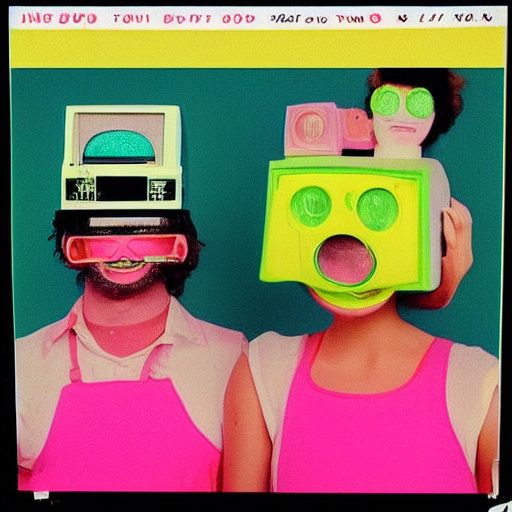
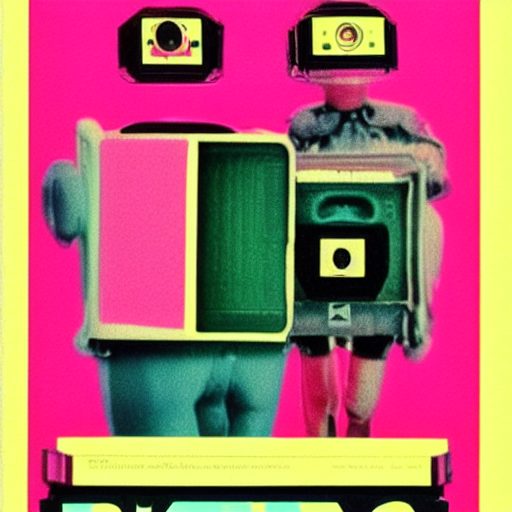
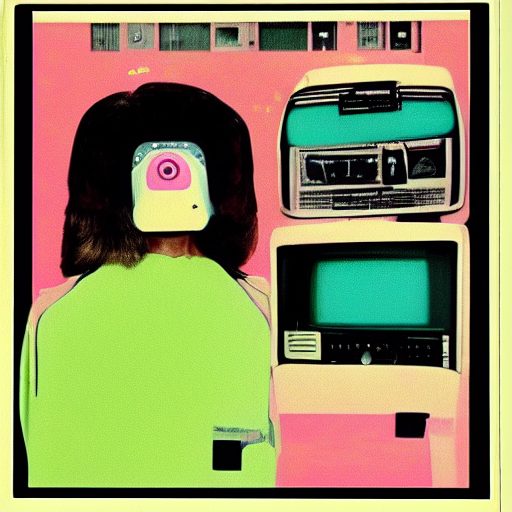
April 2026 · Stable Diffusion 1.5A LoRA is a small add-on that teaches an existing image model one new look. I trained two on my own computer: amory_aesthetic on 478 of my own captioned images (1,200 steps, about 34 minutes) and z0glyphs on 240 synthesized glyph images. These are test outputs.